
US Winter Wheat Prospects
- Monday February 6, 2006
This analysis featured in the February 6, 2006 issue of the HGCA's MI Prospects, Volume 8, Number 15
Key points
- Winter wheat area again limited
- Some crop development problems developing
- Modest US winter wheat crop expected in 2006
- Wheat market prospects not threatened by 2006 harvest
The January USDA winter wheat area estimates together with crop development reports suggest another relatively modest US winter wheat crop. At the current stage of crop development, US market prospects do not appear threatened by the 2006 winter wheat crop.
The USDA January estimate of 2006 winter wheat area is 16.7Mha, 2% above the actual sown area last year which was the smallest sown area in more than 20 years (Table 1). It is only slightly more than the estimate at this time a year ago. Very divergent trends in area are apparent on a regional basis.
continue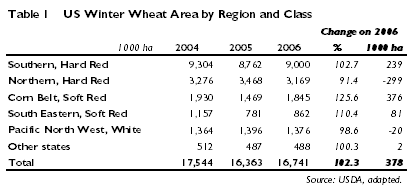 continued
The hard red winter wheat (HRW) area, predominantly west of the Mississippi River and east of the Rockies is down 1% in aggregate. But the area is higher, by about 3%, in the south, in the three largest producing states, Kansas, Texas and Oklahoma. With sowing conditions mixed but on balance favourable, there was some recovery from last year’s weather reduced area. In contrast in the north, the area is down 9%, despite generally excellent sowing and germinating conditions.
A variety of reasons are given for this apparent anomaly. The northern states are more distant from markets and profitability was threatened by higher energy and freight costs last autumn. Substantial premiums for higher protein spring wheats encouraged some farmers to delay sowing until the spring. In some areas on the eastern edge of the wheat belt other spring crops including maize and soyabeans are becoming increasingly profitable as more drought tolerant varieties are developed. The reduced area in other regions simply reflects a return to more usual sowing patterns after a larger than usual sown area last year.
Soft red winter wheats (SRW) are grown widely east of the Mississippi, often in competition with spring sown crops. The area sown to this class of wheat is up 19% from last year. This is a recovery from last year’s greatly reduced level which was a result of excessively wet sowing conditions following a late maize harvest in northern areas. This year’s sowing and germination conditions were largely ideal. While the recovery in area has been substantial, the SRW wheat area is still 12% below 2004. The area sown to soft white winter wheat (SWW), grown predominantly west of the Rockies in the Pacific Northwest, is down 1% and in variable condition.
In the final USDA crop progress report of 2005 at the end of November, winter wheat crop conditions were rated by 52% of reporters as good to excellent. This is more than 24 points lower than last year. This follows declining conditions as the autumn progressed and is towards the low end of typical crop rating at that time of year. Of the major states, however, only in Texas were conditions rated as unusually poor.
The US winter wheat crop is a long way from harvest, but conditions are evolving that will almost certainly limit yield potential. A significant drought area has developed in northern Texas and southern Oklahoma which, in a normal year, would not be of immediate concern. This year, however, winter wheat crops have come out of dormancy unusually early in this area due to exceptionally mild conditions. The need for moisture is immediate and yield potential has almost certainly been lost.
Elsewhere, importantly in Kansas, but throughout the rest of the US, conditions look relatively favourable with above average temperatures generally being accompanied by good moisture. It is therefore possible that favourable yields away from the drought area will result in above average yield overall. There do not appear to be any crop development concerns in the soft red or white winter wheat areas.
The market situation for US wheats in aggregate has improved as the season progressed. The initial projection in May 2005 suggested a 25% increase in end-stocks to 18.5Mt. But subsequently estimates of production have been lowered and projections of exports increased, with projected carry-over now placed nearly unchanged from a year ago.
Because of the relatively small area sown to winter wheat, as opposed potential yields, current prospects are for another relatively modest US winter wheat harvest in 2006. Although this is very dependent on crop development between now and harvest, prospects for US wheat markets in 2006 do not appear threatened by the 2006 crop. Indeed the probability of improved fundamentals are slowly emerging at this time, more so for some classes of wheat than others.
Stocks-use-ratios, a general measure of supply conditions, are projected by the USDA to recover this year for all classes of US wheat except HRW wheat (Graph 1).
continue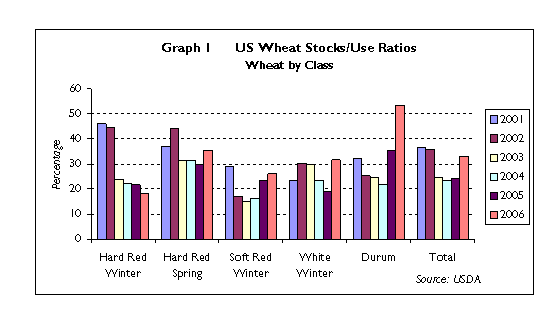 continued
But this is only occurring four years after the 2002 drought, when US grain supplies were reduced. HRW wheat stocks-use-ratios, however, continue to trend lower with US exports of this class of wheat being sustained even with declining supplies. This year’s end-season stocks are projected at 4.7Mt, less than half the level of five years ago.This tight supply has been reflected in higher premium for HRW over SRW wheat - Kansas as opposed to Chicago futures market prices (Graph 2). However, it seems that the premiums were not sufficient to significantly increase plantings.
continue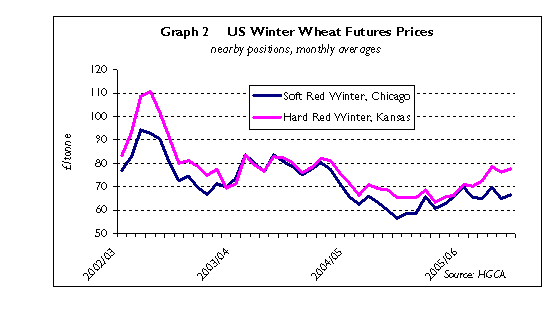 continued
The recovery in SRW wheat stocks-use-ratios is a reflection of declining exports of this wheat rather than supply factors. The long-term trend in declining area and production of SRW wheat continues as farmers opt for alternative production opportunities, mainly spring sown maize and soyabeans.
The 1996 Freedom to Farm Act has had most impact on HRW wheat production as growers of this wheat have more production alternatives. This act removed incentives to maintain conventional cropping patterns to maximise government payments. It is also evident that more drought tolerant varieties of maize and soyabeans have enabled farmers to grow these crops on more marginal land.
The SWW wheat situation is somewhat isolated from the influences of the HRW wheat markets which are dominated by Atlantic hemisphere developments. SWW wheat tends to be used for noodle production in east Asian markets and is shipped out of Pacific ports. The wild cards in this market are Australian production and Chinese activity.
David Walker 001 780 434 7615
top of page